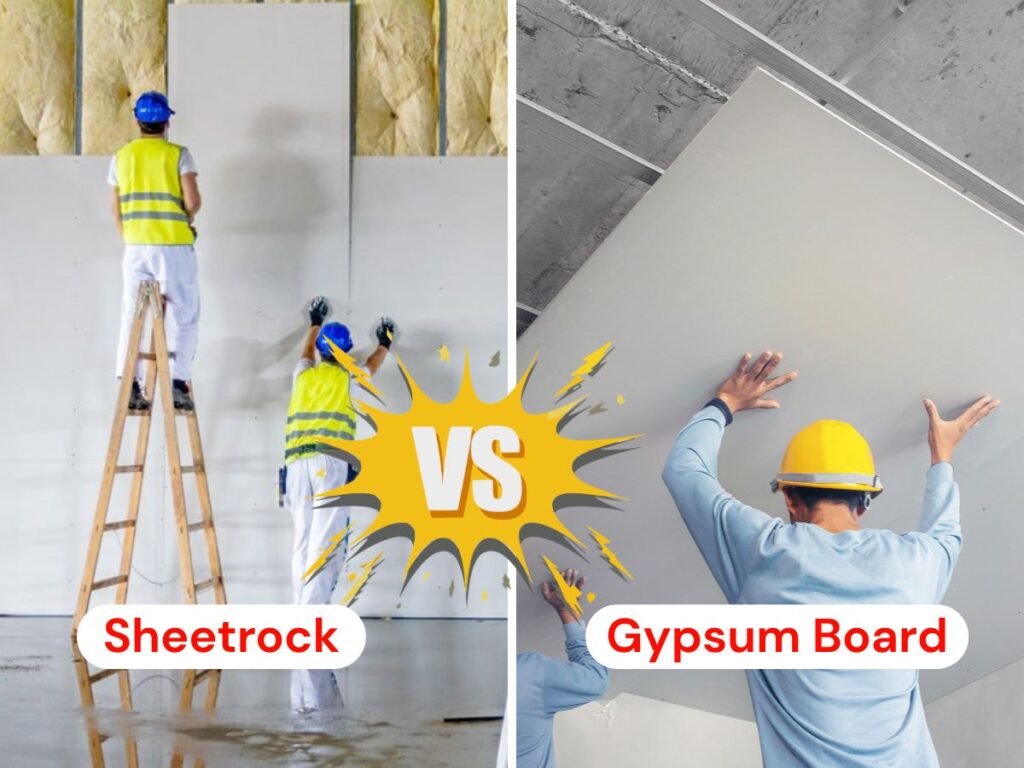
Sheetrock and gypsum board are not two different products. Sheetrock is simply a brand name for drywall made by the USG Corporation, while “gypsum board” is the broader, generic term. Understanding this difference helps you choose the right material and the right contractor for your next home or commercial project.
What Is Gypsum Board?
Gypsum board — also called plasterboard, wallboard, or drywall — is a manufactured construction panel that builders make from a gypsum plaster core pressed between two heavy sheets of paper. Today, it stands as one of the most widely used interior wall finishing materials in North America, and contractors rely on it for both residential homes and commercial buildings alike.
The core material, gypsum, is a naturally occurring mineral formally known as hydrous calcium sulphate. Miners extract it across the United States, and builders value it because it offers several key benefits:
- Naturally fire-resistant
- Lightweight yet structurally strong
- Easy to cut, shape, and install
- A cost-effective alternative to traditional lath and plaster
Moreover, gypsum board falls under a broad, generic category. As a result, it includes products from dozens of manufacturers — from National Gypsum (Gold Bond) and CertainTeed to Georgia-Pacific and USG Corporation. In other words, not every gypsum board panel carries the same brand or price tag.
What Is Sheetrock?
Sheetrock is a registered trademark brand name that the USG Corporation (United States Gypsum Company) owns. It ranks among the most recognised drywall brands in the world, and USG builds it using the same fundamental construction as all gypsum board: a gypsum plaster core sandwiched between two sheets of durable paper.
Because Sheetrock grew so popular after its introduction, many people began using the word “Sheetrock” the same way they use “Kleenex” for facial tissues — as a generic term for all drywall. Consequently, this habit created much of the confusion around Sheetrock vs gypsum board that homeowners and contractors still deal with today.
Key fact: USG Corporation introduced the Sheetrock brand around 1917 and quickly turned it into a trusted name among professional contractors throughout the 20th century.
Is Sheetrock the Same as Gypsum Board?
Yes and no. Here is the simplest way to think about it:
| Term | What It Means |
|---|---|
| Gypsum Board | The broad, generic category — any panel with a gypsum core |
| Drywall / Plasterboard / Wallboard | All synonyms for gypsum board |
| Sheetrock | A specific brand of gypsum board made by USG Corporation |
All Sheetrock is gypsum board. Not all gypsum board is Sheetrock.
To put it simply: all Sheetrock is drywall, just as all Kleenex is a facial tissue — but not all facial tissues are Kleenex. Ultimately, the difference comes down to brand, not product type. For most residential and commercial drywall projects in the Bronx, either option serves you well-however, what matters more is the type of drywall you select for the specific application.
History and Origins of Sheetrock and Gypsum Board
The story of modern drywall begins in the early 1900s. Here is a brief timeline that shows how far the industry has come:
- 1800s: Interior walls relied on the labour-intensive lath and plaster method — a process that took up to a week per room.
- 1902: The Sackett Plaster Company merged and formed the United States Gypsum Company (USG).
- 1913: USG then developed the Adamant Board, a refinement of earlier gypsum panels that eliminated interior plies of paper and left a solid gypsum core.
- Late 1940s: As a result, drywall adoption surged across America, replacing lath and plaster as the dominant wall finishing method because of its speed, cost-effectiveness, and fire resistance.
Today, USG remains the leading gypsum panel manufacturer in the world, and the company continues to expand its product line to include mold-resistant, fire-rated, flexible, and soundproof panel options.
Composition and Materials
How Gypsum Board Is Made
Manufacturers produce standard gypsum board through a straightforward process. First, workers mine raw gypsum (or source synthetic FGD gypsum from industrial processes). Next, they calcine (heat) the gypsum to drive off water, which produces a fine white powder. Then, they mix this powder with water and additives to create a smooth paste. After that, workers spread the paste between two layers of heavy kraft paper. Finally, machines kiln-dry the sheets for rigidity and cut them to standard sizes.
The result: a rigid, lightweight panel that contractors install directly onto wall framing and ceilings.
How Sheetrock Is Different
Sheetrock follows the same fundamental construction process. However, USG uses a refined mixture of both natural and synthetic gypsum and adds materials such as fibreglass for enhanced fire resistance along with hardening agents for improved durability. In addition, this formulation contributes to Sheetrock’s consistent quality and ease of installation that professional contractors across the Bronx and NYC depend on.
Drywall Thickness Options
Drywall panels come in several standard thicknesses. Choosing the right one for your project matters greatly:
| Thickness | Best Use |
|---|---|
| ¼ inch | Curved walls, remodelling over existing walls |
| 3/8 inch | Light partitions and remodelling |
| ½ inch | Most common — standard interior walls and ceilings |
| 5/8 inch (Type X) | Fire-rated assemblies, commercial buildings, garages |
Standard Gypsum Board Sizes
- 4 ft × 8 ft — Most common, easiest to handle (covers 32 sq. ft.)
- 4 ft × 10 ft — Ideal for taller walls
- 4 ft × 12 ft — Reduces seam count on large walls and ceilings
Types of Drywall Panels: Which One Do You Need?
Not all interior wall panels perform the same way. In fact, choosing the right type is critical for performance, code compliance, and long-term durability. Below are the most common options our team at Brilliant Renovation LLC uses for Bronx-area homes and buildings:
1. Standard Drywall (White Board)
This is the most common and affordable option. Contractors use it for interior walls and ceilings in bedrooms, living rooms, hallways, and offices where moisture and fire risks remain low.
2. Moisture-Resistant Drywall (Green Board)
This panel features an oil-based, moisture-resistant coating. As a result, it works best in bathrooms, kitchens, laundry rooms, and basements. However, it is not fully waterproof, so builders should not expose it to direct water contact.
3. Mold-Resistant Drywall (Purple Board)
Unlike standard panels, this option uses a paperless, fibreglass facing with a mold-resistant coating. Furthermore, it outperforms green board in wet areas and makes the best drywall choice for bathrooms where workers apply tile.
4. Fire-Resistant Drywall (Type X)
This panel contains non-combustible fibreglass fibres and a thicker gypsum core. In addition, NYC building code requires it in garages, stairwells, utility rooms, and commercial buildings. It also produces less smoke during a fire than standard drywall — a critical safety advantage.
5. Soundproof Drywall Panels (Acoustic Drywall)
Manufacturers engineer this panel with damping polymers and multiple-layered materials that significantly reduce sound transmission. Consequently, it works perfectly for home theatres, music studios, bedrooms, and multi-family buildings. Note, however, that it costs considerably more than standard drywall.
6. Eco-Friendly Drywall Materials
Many modern gypsum boards now incorporate recycled synthetic gypsum (FGD gypsum) — a byproduct of coal-fired power plant scrubbers. For that reason, builders who prioritise green construction often choose these panels for LEED-certified and sustainable projects.
7. Lightweight Gypsum Board
Newer product lines offer panels that weigh up to 30% less than traditional drywall. As a result, installation becomes easier — especially on ceilings — without sacrificing structural performance.
Sheetrock vs Gypsum Board: Cost Comparison
One of the most common questions homeowners ask concerns Sheetrock vs gypsum board cost. Here is what the current data shows:
Material Costs (Per Sheet)
| Drywall Type | Estimated Cost Per Sheet (4×8) |
|---|---|
| Standard gypsum board | $10 – $15 |
| Moisture-resistant (green board) | $13 – $20 |
| Fire-resistant Type X | $15 – $22 |
| Mold-resistant (purple board) | $15 – $25 |
| Soundproof acoustic drywall | $30 – $60+ |
Note: Sheetrock brand panels from USG typically carry a slight premium over generic gypsum board. However, for most residential projects, the performance difference between Sheetrock and other quality brands stays minimal.
Full Drywall Installation Costs (Materials + Labor)
According to current industry data, drywall installation in 2025–2026 averages $1.50 to $3.50 per square foot, including both materials and labor. Here is a breakdown by room:
| Room / Project | Estimated Total Cost |
|---|---|
| Standard 12×12 bedroom | $600 – $1,500 |
| Bathroom | $430 – $500 |
| Living room (500 sq. ft.) | $750 – $1,750 |
| Full basement (1,000+ sq. ft.) | $1,500 – $5,000 |
| Entire home installation | $3,000 – $10,000+ |
Specialty drywall pricing premiums:
- Moisture-resistant: 20–50% more than standard
- Fire-resistant (Type X): 30–60% more than standard
- Soundproof acoustic: 2–3× the cost of standard drywall
Bronx & NYC Note: Because urban markets like the Bronx and New York City carry higher local labour rates and stricter building code requirements, expect costs to run 10–15% higher than national averages.
Pros and Cons of Sheetrock
Advantages of Using Sheetrock
- Consistent quality — USG sets manufacturing standards among the highest in the industry
- Wide product variety — Mold Tough, Firecode, Flexible, and other specialty lines give contractors more options
- Trusted by contractors — Suppliers stock it widely, so contractors source it quickly
- Excellent fire resistance — Even standard Sheetrock delivers inherent fire resistance from the gypsum core
- Easy to install — Panels score and snap cleanly and hold screws reliably
- Smooth finish — The paper facing accepts joint compound, paint, and wallpaper without issue
Disadvantages of Sheetrock
- Brand premium — Sheetrock costs slightly more than equivalent generic gypsum board products
- Heavy panels — Standard sheets require two people or special lifts for ceiling installation
- Not waterproof — Standard panels absorb moisture quickly, so contractors must use the correct specialty type in wet areas
Pros and Cons of Gypsum Board
Advantages of Using Gypsum Board
- Cost-effective — Generic gypsum board often delivers the most budget-friendly wall covering solution per square foot
- Multiple manufacturer options — Homeowners can compare pricing from National Gypsum, Georgia-Pacific, CertainTeed, and others
- Eco-friendly options available — Many brands now use recycled FGD gypsum, which supports sustainable construction goals
- Naturally fire-resistant — The gypsum mineral itself resists fire and produces minimal smoke
- Highly customisable — Available in moisture-resistant, mold-resistant, fire-rated, and lightweight formulations
- Fast to install — Contractors finish an entire room in a day — far faster than traditional lath and plaster
Disadvantages of Gypsum Board
- Quality varies by brand — Not all manufacturers maintain the same standards; in fact, subpar imported panels caused health issues and infrastructure damage in the late 2000s
- Fragile before installation — Panels crack or break if workers handle them carelessly
- Limited moisture tolerance — Even green board cannot withstand direct water exposure; for shower walls, cement board works better
Best Applications: Where to Use Each {#best-applications}
Drywall for Interior Walls
Standard ½-inch gypsum board works best for bedrooms, living rooms, dining rooms, hallways, and offices. It is the go-to choice for home construction and interior remodelling throughout the Bronx.
Gypsum Board for Ceilings
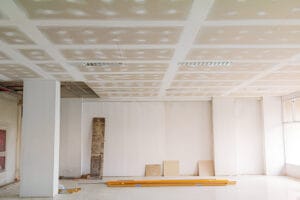
For ceiling applications, use lightweight gypsum board or 5/8-inch sag-resistant ceiling panels. These panels carry specific engineering that resists gravity-induced sagging over time — a critical detail that general-purpose panels do not provide.
Best Drywall for Bathrooms
For bathroom walls away from water, moisture-resistant green board works well. However, for tile backer areas near showers, mold-resistant purple board performs better. In shower stalls, skip drywall entirely and use cement board instead.
Sheetrock for Home Construction
Sheetrock brand panels deliver a reliable, contractor-approved solution for complete new home construction — particularly the Firecode and Mold Tough product lines, which help builders meet NYC code requirements.
Drywall for Commercial Buildings
New York City building codes commonly require Type X fire-rated gypsum board (5/8-inch) for commercial, multi-family, and mixed-use buildings. Therefore, always consult a licensed contractor who knows local code before you purchase materials.
Sheetrock vs Plaster Walls
Traditional plaster walls offer exceptional durability and soundproofing. Nevertheless, they cost far more and take far longer to install. Modern gypsum board and Sheetrock deliver comparable results at a fraction of the cost and installation time, which is why contractors across New York strongly prefer them for both new builds and renovations.
Drywall Installation Process
Whether you choose Sheetrock or generic gypsum board, the installation process follows the same steps. Here is exactly what professional drywall installation looks like when Brilliant Renovation LLC handles your project:
Tools Needed for Installation
- Drywall panels (correct type and thickness for your application)
- Drywall screws and screw gun
- Drywall T-square and utility knife
- Joint compound (mud) and drywall tape
- Corner beads (metal or paper)
- Drywall sander and sanding sponges
- Primer and paint
Step-by-Step Drywall Installation Process
Step 1 — Prepare the Workspace First, ensure wall framing (wood or metal studs) sits level, plumb, and properly spaced — typically 16 inches on centre. Also, confirm that electricians and plumbers have finished their rough-in work before you close the walls.
Step 2 — Measure and Cut Panels Next, score the paper face with a utility knife along a T-square line, then snap the panel and cut through the back paper. For outlets and fixtures, use a drywall router or hole saw to maintain clean edges.
Step 3 — Hang the Drywall After cutting, always hang ceilings first, then walls. Secure each panel to studs using drywall screws, setting them just below the surface without tearing the paper facing. Additionally, stagger panel seams for greater structural integrity.
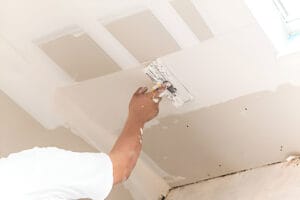
Step 4 — Tape and Apply Joint Compound Then apply paper or mesh tape over all seams, followed by the first coat of joint compound (mud). Allow each coat to dry fully before moving to the next step.
Step 5 — Coat and Sand Subsequently, apply a second and often a third coat of joint compound, feathering the edges smooth with each pass. Sand between coats with fine-grit sandpaper to avoid ridges and lap marks.
Step 6 — Prime and Finish Finally, apply a drywall primer before your chosen paint or wall finish. For areas with critical lighting or high-gloss paint, a Level 5 skim coat finish gives you the smoothest, most professional result.
Common Mistakes to Avoid
- Hanging drywall without proper backing at seams
- Setting screws too deep and tearing the paper face
- Skipping the primer coat – this causes paint to absorb unevenly
- Using standard drywall in bathrooms or basements without moisture-resistant panels
- Rushing between coats of joint compound before full drying
Common Drywall Problems and How to Fix Them
Drywall Cracks Repair
Hairline cracks appear frequently in older homes as the structure settles over time. For small cracks, a contractor fills them with joint compound, sands them smooth, and repaints. However, larger or recurring cracks may signal structural movement — in that case, always get a professional assessment before patching.
Gypsum Board Water Damage
Water-damaged drywall turns soft, discolours, and often develops mould. Rather than patching over the damage, contractors must cut out and replace the affected sections entirely. Moreover, teams should always find and fix the source of moisture first — otherwise, the same problem returns within months.
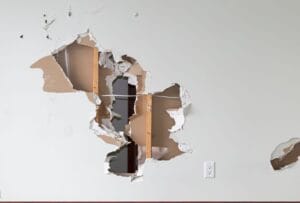
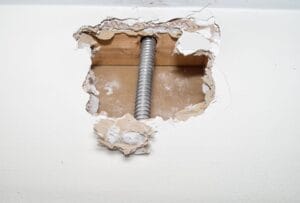
How to Fix Sheetrock Holes
- Small holes (under 6 inches): Use a drywall patch kit or cut a clean square, install backing, and apply joint compound in layers.
- Large holes: Cut a clean rectangle, install wood or metal backing, hang a new patch panel, then tape, mud, sand, and finish to match the surrounding wall.
Drywall Maintenance Tips
- Inspect walls and ceilings annually for cracks, soft spots, or staining
- Re-caulk where drywall meets trim to prevent moisture infiltration
- Never paint over mould — always remediate the source first
- In the Bronx and NYC, older buildings may contain asbestos in existing wall materials — consequently, always schedule a professional assessment before any demolition work begins
How to Choose the Right Material for Your Project
Not sure whether to specify Sheetrock or generic gypsum board? Here is a simple decision framework to guide you:
Choose Standard Gypsum Board When:
- Budget is a primary concern
- Your project involves low-moisture living areas (bedrooms, offices, hallways)
- You want to compare pricing across multiple brands
Choose Sheetrock When:
- You want the consistency and reliability of a nationally recognised brand
- Your contractor recommends USG-approved products
- You need specialty panels like Firecode or Mold Tough
- Your building plans or permit specify it by name
Always Choose Specialty Drywall When:
- Bathrooms, kitchens, laundry rooms → Moisture or mold-resistant panels
- Garages, utility rooms, stairwells → Type X fire-rated panels
- Home theatres, music studios, multi-family units → Soundproof acoustic panels
- Ceilings → Sag-resistant or lightweight ceiling panels
Pro Tip from Brilliant Renovation LLC: When in doubt, consult a licensed contractor before you purchase any materials. Choosing the right drywall type for your specific application can save you from costly repairs — and code violations – down the line.
Why Hire a Professional Drywall Contractor in the Bronx?
Drywall installation may look straightforward — but achieving a smooth, professional finish that passes inspection and lasts for decades demands skill, the right tools, and years of hands-on experience. Here is what you get when you hire Brilliant Renovation LLC:
Licensed and Insured
We hold a full licence and carry insurance as a home improvement contractor serving the Bronx and all of New York City. As a result, your project stays protected from start to finish.
Expert Craftsmanship
Our team specialises in drywall installation and repair, joint compound and taping, and drywall finishing techniques, including smooth Level 5 finish work. We never cut corners.
Right Material for Every Job
We evaluate your space and recommend the correct drywall type — whether that means moisture-resistant panels for your bathroom renovation, fire-rated gypsum board for your garage, or acoustic drywall for your finished basement.
Full Home Renovation Services
Beyond drywall, we also offer:
- Interior and exterior painting
- Bathroom remodelling
- Basement renovation
- Flooring installation
- Complete home and commercial renovations
Serving the Bronx and All NYC Areas
We serve homeowners, landlords, property managers, and real estate professionals across the Bronx, Manhattan, Brooklyn, Queens, and nearby areas. In short, wherever your property sits in New York City, our team reaches you.
Ready to Start Your Drywall Project?
If you are searching for drywall contractors near me in the Bronx, NY — look no further.
Brilliant Renovation LLC is your trusted local drywall company for residential and commercial projects of every size. Whether you need a quick sheetrock repair or a full drywall installation for new construction or renovation, we deliver quality results on time and on budget.
📞 Call or Text: +1 917-705-4571 🌐 Visit: brilliantrenovationllc.com 📍 Serving: Bronx, NY and all nearby areas
Get your free estimate today — no obligation, no pressure.
Frequently Asked Questions (FAQ)
Sheetrock is a brand name for gypsum board that USG Corporation manufactures. All Sheetrock is gypsum board, but not all gypsum board is Sheetrock. In other words, the distinction is brand versus product category — not two separate materials.
They are functionally the same product. Sheetrock carries a strong reputation for consistent quality. However, many other brands of gypsum board perform equally well. What matters more is choosing the right type of drywall for your specific application — for instance, moisture-resistant, fire-rated, or acoustic panels.
There is no functional difference. Plasterboard, wallboard, gypsum board, and drywall are all names for the same product. Regional preferences and industry habits create the variation in terms — but they all describe the same gypsum-core panel that finishes interior walls and ceilings.
Current 2025–2026 pricing for drywall installation ranges from $1.50 to $3.50 per square foot for materials and labour combined. Because New York City carries higher local labour rates, costs here tend to run 10–15% above national averages. Contact Brilliant Renovation LLC at +1 917-705-4571 for a free project estimate.
What type of drywall is best for a bathroom?
For bathroom walls away from direct water contact, use moisture-resistant (green board) drywall. For areas where workers will install tile or where moisture exposure stays high, use mold-resistant purple board instead. Never install standard white drywall in a bathroom — it absorbs moisture, swells, and grows mould quickly.
What is fire-resistant gypsum board (Type X)?
Type X drywall contains non-combustible fibres — usually fibreglass — embedded in a thicker gypsum core. As a result, it delivers a fire rating of at least 1 hour. Furthermore, NYC building code requires it in garages, utility rooms, stairwells, and certain commercial applications.
Can I install drywall myself, or should I hire a professional?
Small repairs are often DIY-friendly with a patch kit. However, full room or home drywall installation — especially taping, mudding, and achieving a smooth finish — demands professional skill and the right tools. Poor finishing is difficult and costly to correct after the fact, so most homeowners save money by hiring a pro from the start.
How long does gypsum board last?
With proper installation and ongoing maintenance, quality gypsum board lasts 30–70 years in normal living conditions. Water damage, physical impact, and poor installation technique are the leading causes of premature failure.
What are the best drywall brands besides Sheetrock?
Several reputable manufacturers produce high-quality gypsum board panels. These include National Gypsum (Gold Bond), CertainTeed, Georgia-Pacific, and ToughRock. All meet standard specifications for residential and commercial construction.
Do you offer gypsum board installation services near me in the Bronx?
Absolutely! Brilliant Renovation LLC offers professional drywall installation, sheetrock repair services, and full drywall finishing for homes and commercial properties across the Bronx and New York City. Call us today at +1 917-705-4571 or visit brilliantrenovationllc.com to request your free quote.
Latest Post:
- Small Kitchen Remodel Cost: What Bronx, NY Homeowners Can Expect to Pay
 If you’ve started researching small kitchen remodel cost, you’ve probably noticed the numbers online are… Read more: Small Kitchen Remodel Cost: What Bronx, NY Homeowners Can Expect to Pay
 - Cost to Install Bathroom Cabinets: A Bronx, NY Homeowner’s Pricing Guide
 Staring at a wobbly, water-stained bathroom cabinet and wondering what a replacement will actually cost… Read more: Cost to Install Bathroom Cabinets: A Bronx, NY Homeowner’s Pricing Guide
 - Home Transformation: A Bronx Homeowner’s Guide to Turning Dated Rooms Fresh and Modern
 Every home transformation starts the same way. You walk into a room you’ve lived with… Read more: Home Transformation: A Bronx Homeowner’s Guide to Turning Dated Rooms Fresh and Modern
 - Kitchen Remodel Cost Calculator: What It Can (and Can’t) Tell You About Your Bronx Kitchen
 If you’ve typed “kitchen remodel cost calculator” into Google, you’re probably staring at a blank… Read more: Kitchen Remodel Cost Calculator: What It Can (and Can’t) Tell You About Your Bronx Kitchen
 - Kitchen Remodel Contractors: 7 Reasons to Choose Brilliant Renovation LLC in the Bronx
 If you’ve typed “kitchen remodel contractors near me” into Google, you’re probably standing in a… Read more: Kitchen Remodel Contractors: 7 Reasons to Choose Brilliant Renovation LLC in the Bronx