If you’ve ever hired a contractor or walked into a home improvement store in the Bronx, you’ve probably heard all three terms, drywall, Sheetrock, and gypsum thrown around as if they mean the same thing. Sometimes they do. Often they don’t. And knowing the real difference between drywall vs Sheetrock vs gypsum can save you money, prevent costly mistakes, and help you make smarter decisions the next time you need a wall repair, renovation, or new build.
At Brilliant Renovation LLC, we’ve been serving homeowners, landlords, and property managers across the Bronx, Westchester County, and surrounding New York areas for over 12 years. In that time, one of the most common questions we hear is: “What IS the difference between drywall, Sheetrock, and gypsum?”
This in-depth guide will answer exactly that, and help you decide which material is right for your specific project.
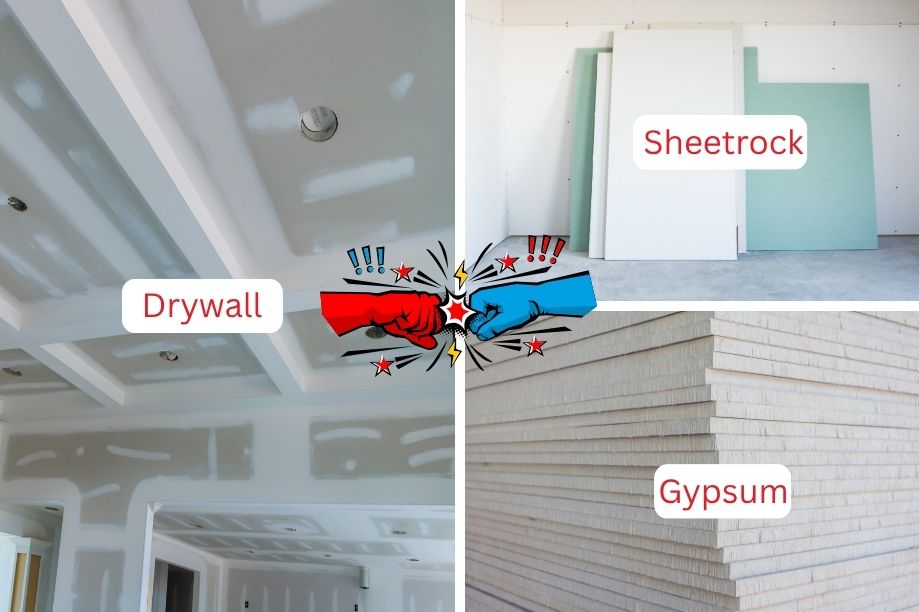
Quick Answer: Gypsum is the raw mineral. Drywall is a finished wall panel made from gypsum. Sheetrock is simply a brand name for drywall made by USG (United States Gypsum Company). All Sheetrock is drywall — but not all drywall is Sheetrock.
What Is Gypsum? The Foundation of It All
Before diving into drywall vs Sheetrock vs gypsum, it helps to understand where everything starts: the mineral itself.
Gypsum (calcium sulfate dihydrate) is a naturally occurring soft sulfate mineral. It has been used in construction for thousands of years — from ancient Egyptian plaster walls to modern fire-rated commercial buildings. Its key properties make it uniquely suited for interior construction:
- Naturally fire-resistant: Gypsum contains water molecules in its crystalline structure. When exposed to heat, that water is released as steam, slowing the spread of fire.
- Soft and easy to work with: It can be ground into powder, mixed with water, and pressed into sheets.
- Environmentally friendly: Gypsum is abundant, non-toxic, and recyclable.
- Acoustically effective: Dense enough to reduce sound transmission between rooms.
In construction today, gypsum is primarily used as the core material in drywall panels. It’s also used in plaster, gypsum board, gypsum plasterboard, and specialty products like glass-mat gypsum for moisture-heavy environments.
When a Bronx contractor talks about “gypsum walls,” they’re almost always referring to drywall — panels made from gypsum pressed between two layers of recycled paper.
What Is Drywall? Understanding Drywall and Its Uses
Drywall — also called wallboard, plasterboard, gypsum board, or gypsum wallboard (GWB) — is the most common interior wall and ceiling material used in residential and commercial construction in the United States today.
It consists of a dense gypsum core (roughly 90% gypsum) sandwiched between two thick sheets of recycled paper. The result is a rigid, lightweight panel that comes in standard sizes, most commonly 4×8 feet, 4×10 feet, or 4×12 feet.
Why Drywall Replaced Traditional Plaster
Before drywall, interior walls were built using a labor-intensive lath and plaster system — a process that required multiple wet coats and days of drying time between each application. A single room could take a week or more to finish.
Drywall installation proved 10 times faster than traditional plastering. By World War II, widespread labor shortages pushed builders to adopt drywall en masse — and by the 1950s, it had become the standard in American home construction.
Types of Drywall Used in Bronx, NY Homes
- Standard Drywall (White Board): For everyday interior walls and ceilings in dry areas. Available in 1/4″, 3/8″, 1/2″, and 5/8″ thicknesses.
- Moisture-Resistant Drywall (Green Board): Features a water-resistant paper face. Suitable for bathrooms and laundry rooms — but NOT for direct water exposure.
- Mold-Resistant Drywall (Purple Board): Offers superior mold and moisture resistance. Ideal for Bronx basements and below-grade spaces where humidity is a constant concern.
- Fire-Resistant Drywall (Type X): Contains glass fibers for extra fire protection. Required by NYC and Bronx building codes in garages, utility rooms, and shared walls in multi-family buildings.
- Soundproof Drywall (QuietRock): Uses damping polymers to significantly reduce sound transmission. Popular in co-ops, condos, and multi-family units throughout the Bronx.
- Lightweight Drywall: 30% lighter than standard panels. Easier to handle and reduces structural load — a practical choice for large-scale renovations.
- Flexible / Bendable Drywall (1/4″ panels): Can be curved to create arched walls and rounded architectural features.
What Is Sheetrock? How Is It Different from Drywall?
Here’s where most homeowners get confused: Sheetrock IS drywall. Specifically, it’s the brand name for drywall panels manufactured by the United States Gypsum Company (USG).
The name was coined in 1917 by USG sales representative D.L. Hunter. The brand became so dominant — particularly after being featured prominently at the 1933–34 Chicago World’s Fair — that the word “Sheetrock” entered everyday language as a synonym for all drywall. Think of it like “Kleenex” for facial tissues, or “Band-Aid” for adhesive bandages.
Key fact: Only USG has the legal right to call their drywall panels “Sheetrock.” Other manufacturers — including National Gypsum, CertainTeed, Georgia-Pacific, and American Gypsum — produce equally high-quality drywall under their own names.
Is Sheetrock Better Than Generic Drywall?
For standard residential walls and ceilings, generic drywall performs nearly identically to Sheetrock. Both use the same core composition: approximately 90% gypsum sandwiched between recycled paper.
Sheetrock does offer a few proprietary advantages:
- UltraLight panels weigh about 30% less than standard sheets, reducing installer fatigue on large jobs.
- GridMarX guide marks printed on the board simplify measuring and cutting.
- Consistent quality control and documentation — important for commercial projects with strict specifications.
- Proprietary additives that eliminate the sulfur odors that occasionally affect lower-quality generic drywall (a problem traced to certain Chinese-manufactured drywall in the late 2000s).
For premium commercial projects, high-end renovations, or jobs requiring detailed material documentation, Sheetrock justifies its slightly higher cost. For most Bronx residential renovations and repairs, quality generic brands deliver excellent results at 10–25% savings.
Drywall vs Sheetrock vs Gypsum: Side-by-Side Comparison
Here’s a quick-reference comparison table to clarify the differences at a glance:
| Feature | Gypsum | Drywall (Generic) | Sheetrock (USG) |
| What It Is | Raw mineral / raw material | Finished wall panel | Brand-name drywall panel |
| Core Material | Calcium sulfate dihydrate | ~90% gypsum + paper | ~90% gypsum + paper + proprietary additives |
| Cost (per sq. ft.) | Part of drywall cost | $0.40–$0.55 | $0.55–$0.65+ |
| Brand | None – it’s a mineral | Multiple brands | USG only |
| Fire Resistance | Excellent (natural) | Good–Excellent | Excellent |
| Moisture Resistance | Low (standard) | Varies by type | Available (purple board) |
| Availability in Bronx, NY | Sourced by contractors | Widely available | Widely available |
| Best For | Specialty plasters/boards | Standard residential builds | Premium projects & commercial |
Bottom line: When a Bronx contractor asks whether you want “drywall or Sheetrock,” they’re essentially asking about brand preference and budget — not fundamentally different materials.
Cost Comparison: Drywall, Sheetrock, and Gypsum in Bronx, NY
Costs in the Bronx and Westchester County are generally higher than national averages due to labor rates, material transport, and NYC building permit requirements. Here’s what you can realistically expect to pay in 2025:
| Material | Material Cost (per sq. ft.) | Installed Cost (Bronx, NY est.) |
| Standard Drywall | $0.40–$0.55 | $1.50–$2.50/sq. ft. |
| Sheetrock (USG) | $0.55–$0.65 | $1.75–$2.75/sq. ft. |
| Moisture-Resistant Drywall | $0.60–$0.80 | $2.00–$3.00/sq. ft. |
| Fire-Rated (Type X) Drywall | $0.65–$0.90 | $2.25–$3.25/sq. ft. |
| Soundproof Drywall | $2.00–$4.00 | $4.00–$6.50/sq. ft. |
Note: Prices above reflect materials + professional installation by a licensed Bronx contractor. DIY installation saves on labor but adds risk — improper installation voids material warranties and can fail NYC inspections.
Want an accurate quote for your Bronx home or property? Call Brilliant Renovation LLC at +1 917-705-4571 for a free estimate.
How to Choose the Right Material: Drywall, Sheetrock, or Gypsum
Choosing the right wall material isn’t just about brand preference — it’s about matching the material to the specific demands of your space. Here’s how to think through it for common Bronx renovation scenarios:
For Bathrooms & Kitchens
Standard drywall will quickly fail in high-moisture environments. Use moisture-resistant drywall (green board) as a minimum, or mold-resistant purple board for areas near showers, tubs, or sinks. In wet areas with tile or stone cladding, cement board or glass-mat gypsum offers the best protection.
For Multi-Family Buildings & Bronx Co-ops / Condos
NYC and Bronx building codes require fire-rated Type X drywall (5/8″ minimum) for certain wall assemblies in multi-family residential buildings. Soundproof drywall is highly recommended for shared walls between units — reducing noise complaints and improving tenant satisfaction.
For Garages & Utility Rooms
Fire-rated Type X drywall (5/8″) is required by code for walls separating attached garages from living spaces. This is non-negotiable in the Bronx — violating this code during a renovation can cause insurance and liability problems.
For Basements
Bronx basements are prone to moisture intrusion. Always use mold-resistant drywall (purple board) and ensure proper waterproofing before drywall installation. Fiberglass-faced gypsum panels are another excellent option for below-grade spaces.
For Commercial Properties in the Bronx
Commercial projects typically require Sheetrock or another premium brand with documented specifications for fire ratings, acoustic performance, and durability. Consult your contractor and local building department to confirm code requirements before specifying materials.
Installation Tips: Drywall and Sheetrock in Bronx Homes
Whether you’re hanging drywall in a new Bronx build or replacing damaged panels in an older home, proper installation is everything. Here’s what professional installers — like our team at Brilliant Renovation LLC — know that most DIYers don’t:
Step-by-Step Overview of Professional Drywall Installation
- Measure and plan: Calculate square footage, accounting for doors, windows, and outlets. Order 10–15% extra for waste.
- Select the correct panel type: Match the drywall type to the room’s moisture, fire, and acoustic requirements.
- Cut panels to size: Score the paper facing and snap the core cleanly. Use a drywall saw for cutouts.
- Fasten to studs: Use drywall screws (not nails) every 12″ on ceilings, 16″ on walls. Dimple screws slightly below the surface without breaking the paper.
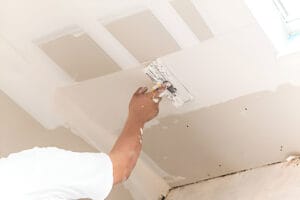
- Tape and mud joints: Apply joint compound (“mud”) and paper tape over seams. Allow each coat to dry fully before sanding.
- Apply 2–3 coats of joint compound: Feather edges wider with each coat for a seamless finish.
- Sand smooth: Use 120-grit sandpaper. Avoid over-sanding — you can damage the paper face.
- Prime and paint: Apply a drywall primer before painting for best adhesion and finish quality.
Common Drywall Installation Mistakes to Avoid
- Using the wrong thickness: 1/2″ for walls and 5/8″ for ceilings is standard. Using 1/2″ on ceilings risks sag over time.
- Skipping blocking: Edges must land on a stud or blocking — floating edges will crack.
- Over-driving or under-driving screws: Both lead to cracked joint compound.
- Not priming before painting: Raw drywall absorbs paint unevenly, ruining the finish.
- Ignoring moisture conditions: Installing standard drywall in a bathroom or basement is one of the most common — and costly — mistakes Bronx homeowners make.
Tools Required for Drywall Installation
- Drywall T-square and utility knife
- Cordless drill with drywall bit
- Drywall screws (coarse thread for wood studs, fine thread for metal studs)
- Joint compound (pre-mixed) and corner bead
- 6″, 10″, and 12″ taping knives
- Sanding sponge and 120-grit sandpaper
- Drywall lifts for ceiling work (non-negotiable for safety and quality)
How to Repair and Patch Drywall & Sheetrock
Drywall repair is one of the most common services we provide at Brilliant Renovation LLC across the Bronx, Westchester County, and surrounding areas. Whether it’s a small nail hole or a large water-damaged section, here’s the professional approach:
Small Holes (Under 6 Inches)
- Use a pre-mixed spackling compound or lightweight joint compound.
- Apply with a putty knife, let dry, sand smooth, prime, and paint.
- For holes between 1–6 inches, use a California patch or a mesh repair kit.
Large Holes or Water Damage
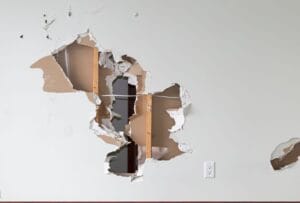
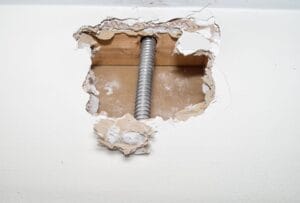
- Cut out the damaged area to the nearest studs using a drywall saw.
- Install blocking (2×4 horizontal pieces) between studs to support the new panel.
- Cut and fit a new drywall patch; fasten to studs and blocking.
- Tape, mud, sand, prime, and paint to match the surrounding surface.
Pro tip: If drywall damage was caused by a leak, always fix the source of moisture FIRST before patching. Patching over wet or water-damaged drywall leads to mold growth — a serious health hazard in Bronx homes and rental properties.
Durability, Maintenance & Environmental Impact of Drywall Products
How Long Does Drywall Last?
With professional installation and normal conditions, drywall can last 30–70 years or more. Modern gypsum wallboard is engineered for long-term performance — far surpassing traditional plaster in ease of repair and maintenance.
Factors that shorten drywall lifespan in Bronx homes include:
- Moisture and humidity (most common in basements and bathrooms)
- Physical impact (especially in high-traffic rental properties)
- Poor initial installation
- Pest damage (termites can damage the paper facing)
Maintenance Tips for Long-Lasting Gypsum Walls
- Address moisture issues immediately — mold can begin growing in 24–48 hours on wet drywall.
- Touch up cracks annually — hairline cracks from seasonal temperature changes are normal and easy to fix before they worsen.
- Use mold-resistant paint in kitchens and bathrooms as an additional barrier.
- In rental properties, inspect drywall between tenancies and patch all holes before repainting.
Environmental Impact of Drywall
Modern drywall is one of the more environmentally responsible building materials available. The paper facing is made from 100% recycled content. Gypsum itself is non-toxic, abundant, and fully recyclable. Many manufacturers now incorporate synthetic gypsum (a byproduct of coal power plant scrubbers) into their panels, diverting industrial waste from landfills.
Demolished drywall can be recycled into new drywall, soil amendments, and cement manufacturing — making it a strong choice for green building projects and LEED-certified renovations.
Residential & Commercial Applications in the Bronx, NY
Residential Uses of Drywall and Sheetrock
In Bronx homes, co-ops, and condominiums, drywall is used for virtually every interior wall and ceiling surface, including:
- New room additions and basement finishing
- Kitchen and bathroom remodeling (moisture-resistant types)
- Soundproofing between floors and shared walls
- Curved architectural features and accent walls
- Covering old plaster in pre-war Bronx buildings
Commercial Applications of Gypsum Board
In commercial construction across the Bronx and Westchester County, gypsum board is the material of choice for:
- Office partitions and demising walls
- Corridor and stairwell fire-rated assemblies (required by NYC building code)
- Drop ceilings and soffits in retail and restaurant spaces
- Acoustic wall systems in medical offices, schools, and conference rooms
Innovative Trends in Drywall Applications
- Digital printing on drywall: Custom wall graphics and murals applied directly to finished gypsum panels.
- Integral LED systems: Drywall panels with built-in LED channels for concealed architectural lighting.
- Prefabricated wall panels: Factory-built drywall assemblies that reduce on-site installation time.
- Ultra-thin veneer plaster over drywall: Combining drywall’s speed with the high-end finish of traditional plaster — popular in luxury Bronx renovations.
Frequently Asked Questions: Drywall vs Sheetrock vs Gypsum
Yes and no. All Sheetrock is drywall, but not all drywall is Sheetrock. Sheetrock is a registered trademark of USG (United States Gypsum Company) — one of many manufacturers of drywall panels. Over decades of market dominance, the brand name became a generic term, similar to “Kleenex” for tissues.
For standard residential applications, there is no meaningful performance difference. Both use the same core gypsum composition. Sheetrock offers some proprietary advantages (lighter UltraLight panels, GridMarX guide marks, sulfur-odor elimination) that may justify the 10–15% price premium for commercial projects or premium renovations.
No. Standard drywall will absorb moisture and grow mold rapidly in bathroom environments. Use moisture-resistant drywall (green board) at minimum, or mold-resistant drywall (purple board) for better long-term performance. In wet areas with tile, use cement board or glass-mat gypsum.
A typical room (250–400 sq. ft.) takes one to two days for hanging and fastening, plus an additional two to three days for taping, mudding, sanding, and priming — allowing for drying time between coats. Full project timeline depends on room count, complexity, and finishing requirements.
Yes, NYC and Bronx building codes require Type X fire-rated drywall (5/8″) in specific locations including attached garages, utility rooms, and shared walls in multi-family residential buildings. Always verify code requirements with your contractor before starting work.
Green board has a water-resistant paper facing with a waxy coating — suitable for moderate moisture areas. Purple board (such as National Gypsum’s Mold Tough) offers both moisture AND mold resistance, earning higher performance ratings for humid environments like Bronx basements.
Ready to Start Your Bronx Drywall Project? Call the Experts.
Whether you’re comparing drywall vs Sheetrock vs gypsum for a new bathroom, finishing a basement, repairing water damage, or renovating a multi-unit property in the Bronx — making the right material choice matters. And getting it installed correctly matters even more.
Brilliant Renovation LLC has been the trusted local choice for drywall installation, repair, and full-scale home renovation in the Bronx, Westchester County, and nearby New York areas for over 12 years. Our experienced, licensed team handles everything from standard drywall replacement to complex fire-rated commercial assemblies — all in compliance with NYC and Bronx building codes.
Our services include:
- Drywall installation, repair & patching
- Bathroom renovation & kitchen remodeling
- Basement finishing
- Roofing, siding, masonry & chimney repair
- Driveways, gutters & skylights
- Residential & commercial construction – Bronx, Westchester County, and nearby NY areas
📞Call us: +1 917-705-4571
🌐Website: brilliantrenovationllc.com
📍 Serving: The Bronx, Westchester County, and all nearby New York areas
Don’t wait for a small crack or water stain to become a major repair bill. Contact Brilliant Renovation LLC today for a free, no-obligation drywall inspection and estimate.